You know the pattern.
You get motivated. You start training again — maybe it's running, maybe it's CrossFit, maybe it's picking up footy or basketball again. It feels good for three or four weeks. Then something tweaks. Lower back. Knee. Shoulder. Hamstring. Take your pick.
You rest. You see a physio. You get told to stretch, maybe some hands-on work, maybe "lay off it for a bit." Four to six weeks later, you're feeling okay again. You start back up. Three or four weeks in, something else tweaks. Sometimes it's the original thing. Sometimes it's something new.
If you've read this far and thought "that's me," you're in the right place. This is one of the most common patterns I see in my clinic. Active guys in their 30s and 40s who used to be athletic, want to be athletic again, and just can't seem to stay healthy long enough to get there.
I know this pattern well. I've lived it myself. So this is what I've learned about why it happens and what actually fixes it.
Why "rest" isn't the answer (even though every physio tells you to do it)
Here's the problem with the rest-and-recover model. It treats your injury like it happened in isolation — like you pulled a hamstring because you ran too hard that one day, or hurt your back because you lifted something wrong that one time.
But that's almost never what actually happened.
What actually happened is your body's capacity to handle the demand you put on it was lower than the demand itself. The injury is the symptom. The real problem is that your tissue — muscle, tendon, joint, whatever — wasn't prepared for what you asked it to do.
When you rest, the symptom calms down. The capacity gap doesn't change. So when you start again, you're loading the same underprepared tissue, and the same thing happens. Different body part, maybe, but the same underlying mechanism.
This is why the stop-start cycle feels endless. You're not solving the actual problem. You're just waiting out the symptom, then re-exposing yourself to the same gap.
What's actually happening in your body (in plain English)
Quick science break. I'll keep it short.
When you were 18 or 22 and training hard, your body was adapting to load constantly. Tendons were getting thicker. Muscles were getting stronger. Bones were remodelling under stress. Your nervous system was wiring up movement patterns efficiently.
Then life happened. Work, kids, life admin. You stopped training regularly. For most guys I see, there's been a 10 to 20 year window of inconsistent training — maybe a gym phase here, a running phase there, but nothing sustained.
During that window, your tissue capacity dropped. Not dramatically — your body didn't "forget" how to move. But the stuff that matters for injury resistance (tendon stiffness, muscle cross-sectional area, joint tolerance to load) quietly declined.
Now you're 38 or 42, and you decide to get back into it. Mentally, you remember being able to go hard. Physically, your tissue is sitting at a much lower baseline than your head thinks it is. You load it like it's still 22. It breaks.
That's the whole story. It's not age, exactly. It's the gap between where your capacity actually is and where your training assumes it is.
The shift that actually matters: load, not rest
Here's what changed it for me, and what changes it for most of the patients I see.
The answer is almost never less. It's usually more — but smarter.
Your tissue gets stronger by being loaded progressively. If you strain a hamstring and you rest it for six weeks, when you come back, your hamstring isn't stronger than when it tore. It's weaker. You've just created a bigger capacity gap, which is why so many guys re-injure the same muscle within a few months of returning.
What actually builds resilience:
- Loading the injured tissue appropriately, early. Not hammering it. But getting it working under progressive load, starting from where it can tolerate.
- Building the tissue around the injury site. A hamstring doesn't work in isolation. It's part of a chain with your glutes, your calves, your lower back, your core. If you only rehab the hamstring, you've missed the system.
- Retraining the movement pattern under fatigue. Most re-injuries happen at the end of training sessions or late in games, when form breaks down. If your rehab only ever trains you when you're fresh, you haven't prepared for where injuries actually occur.
- Respecting the timeline. Tissue adaptation takes months, not weeks. Four sessions of "rehab" isn't rehab. It's a warm-up.
This is the stuff most physio appointments skip — not because the physio doesn't know it, but because a 15-minute appointment doesn't have time for it.
My own story (the short version)
When I was 19 I hurt my back badly. Disc injury. I got told to rest, avoid certain movements, be careful. I did what I was told. It kept coming back.
I bounced between practitioners for about two years. Same advice, roughly. Rest. Careful. Don't load that. Stretch these. Good luck.
Then I ended up in front of a physio who told me something nobody else had said. He said my back wasn't fragile. He said it needed to be loaded, not protected. And he built me a program that progressively loaded the exact stuff everyone else had told me to avoid.
It took months. Not days or weeks. Months of patient, progressive work. But at the end of it, my back was stronger than it had been before the injury. And — this is the part that changed my whole approach — it stayed that way.
That's why I do this job the way I do it. Because I know what it feels like to be stuck in the cycle, and I know what it feels like to actually get out of it.
What this looks like in my clinic
When someone comes in with a recurring injury pattern, the assessment isn't really about the injury. The injury tells me where the symptom is. The assessment tells me where the capacity gap is.
I'm looking at:
- What your tissue can actually handle right now, measured properly — not guessed from a single range-of-motion test
- Where your current training is relative to that capacity (usually way above it)
- The movement patterns that keep putting you in positions your body isn't prepared for
- Your training history and what's worked/failed in the past
Then we build from there. Initial sessions are 30 minutes, follow-ups are 20 minutes. Most people doing this properly need 6 to 12 sessions across 3 to 6 months. Not because it's drawn out on purpose — because that's how long tissue adaptation actually takes.
What you won't get: a quick ultrasound, three stretches, and a "come back if it flares up." That's symptom management, not rehab, and it's the reason you're in the cycle in the first place.
When you might want something more structured than 1-on-1 physio
For a lot of guys, physio is enough. We fix the current problem, you understand your body better, you go train on your own, and you stay out of the cycle.
For some guys, though — especially if you've been bouncing around this pattern for 5 or 10 years — what you actually need is a structured program that covers more than just the current injury. Something that rebuilds the whole system over a defined period, with a framework to follow rather than ad-hoc session-to-session rehab.
That's why I built The Comeback Code — a 12-week program specifically for previously athletic men 30 to 50 who want to break out of the recurring injury pattern for good. It's not for everyone, and it's not a replacement for physio. But if you've tried the 1-on-1 rehab route multiple times and keep ending up back where you started, it might be the right structure for you.
You can find more about it on the site, or just ask me about it next time you're in.
FAQ
Why do I keep getting injured every time I try to get back into training?
Almost always because your tissue capacity is lower than your training is demanding. After a long break from consistent training, your muscles, tendons, and joints have quietly lost adaptation — so when you load them like you used to, they can't handle it. The fix is progressive loading to rebuild that capacity, not more rest between attempts.
Is a recurring injury an age thing?
Not really. Age matters, but most guys in their 30s and 40s in the stop-start cycle aren't there because they're "old." They're there because their tissue hasn't been loaded consistently in 10 to 20 years, and their training is assuming a capacity that no longer exists. Rebuild the capacity, and the age piece matters a lot less than you'd think.
Should I rest a recurring injury?
Usually not the way most people do it. Complete rest lets the symptom calm down but doesn't build the tissue strength that would stop it recurring. Progressive, structured loading is what actually fixes the underlying problem. A good physio will have you moving the injured area within days, not weeks — just under controlled load.
Why does every physio I see just give me stretches and ultrasound?
Because a 15-minute appointment isn't long enough to do anything else. Quick passive treatments are what fits inside short appointment slots at high-volume clinics. Meaningful rehab takes longer appointments and a structured progressive program over months — not a few sessions.
How do I know if a physio is the right fit for recurring injuries?
Ask them how they work with active adults who have a history of the same injury coming back. If the answer involves the words "load," "capacity," "progressive," and a timeline measured in months, you're in the right place. If the answer is about rest, protection, and avoiding aggravating movements, keep looking.
How long does it take to actually break out of the recurring injury cycle?
Honestly, 3 to 6 months minimum for most people, and up to 12 months for long-standing patterns. Tissue adaptation is slow. Anyone who tells you they can fix a 5-year recurring issue in four sessions is selling you something.
I'm in northern Adelaide — where can I get this kind of rehab?
Feel Good Physio Co. is in Greenfields, inside CrossFit TRG. I work almost exclusively with active adults, most of them in exactly this pattern. Initial consults are 30 minutes, follow-ups are 20. Booking is on the site or through Google.
If you've read this far
You're probably the person I wrote this for. The cycle is real, it's frustrating, and you're not broken — you're just under-prepared for what you're asking your body to do. That's fixable.
If you want to sort it properly, book in. If you've got questions first, message me through the site. Either way, don't just wait for the next flare-up.
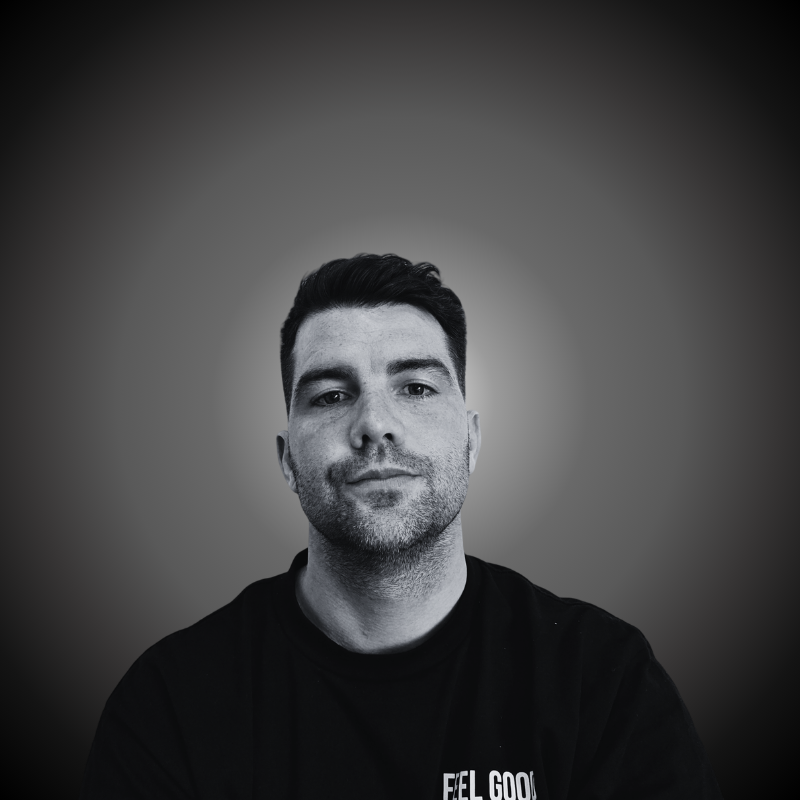
James
Feel Good Physio Co.
Greenfields, SA
Ready to Stop Managing and Start Rebuilding?
The Comeback Code is a 12-week gym-based rehabilitation program for high performers in Adelaide who are done with the injury-reinjury cycle. I take 12 clients maximum.